Story and photos by Janet Jones
“It’s a kind of an installation art piece,” explains Chris Zinkan, as he and wife Judith describe their Calgary Horticultural Society award-winning garden. And who better than a pair of artists to sculpt a masterpiece from a mess of weeds and volunteer Manitoba maples? Judith Zinkan is a professional artist specializing in landscape paintings and Chris, while claiming to be a geologist, clearly has his own artistic talents.
The garden begins at the curb. A broad band of colour and fragrance stretches fully across the property, fairly bursting with sun-loving shrub roses, flowers and foliage, spilling onto the sidewalk as if reaching out to passers-by.
However, the first real indication of the unusual delights to be found here is a forest green wrought iron fence marking the end of the driveway. Its open gate leads to an alcove that was a carport until Chris and Judith decided to integrate it into their living space. Chris closed in two sides of the carport, adding old-fashioned wood-framed windows from a local salvage shop to let light in.
It was Judith’s idea to paint the little room’s concrete floor with diagonal faux Mexican tiles. The paint colours, appropriately named “tomatillo” and “salsa”, give the space a warm, friendly feel that’s heightened by its interesting accent pieces. A ceramic chicken roosts on an early 1900s stove. A terra cotta urn by the door overflows with bright artificial flowers. A red glass star hanging from the ceiling refracts the sun’s rays, and more stars, a moon and a ceramic sun hint at a celestial influence. Protected from the elements, this niche is the perfect spot for watching one of Calgary’s classic thunderstorms.
It’s here a visitor first notices the ceramic tiles that trim the house doorways. “Chris had a space on the overhang and I said ‘I’ll tile it’,” explains Judith. The task was bigger than expected. There are several stages to the process. It took dogged persistence to get the tiles the right size. Eighteen months later they were ready to hang.
The tiles are all stamped with images of ladies’ shoes and standing horses. “Horseshoes over doors are lucky,” Judith explains, adding that visual puns were at one time a favourite focus of her work.
Running across the back of the house is a spacious wooden deck sized perfectly for entertaining a group of friends, either at the table under the canopy of a crisp canvas umbrella or seated on the long railway-station-style bench. From here, the Zinkans appear to have the rolling landscape of neighbouring Confederation Park to themselves. Stella the cat likes to sit here, too, high above the rest of the garden keeping an eye on things.
The garden is terraced downward from the house to the alley. The retaining wall nearest the house originally consisted of a row of tall telephone-type poles planted perpendicularly in the ground. It smelled of creosote and, to the Zinkans’ eyes, was ugly. The solution? Camouflage.
John Chalke, a talented ceramic artist, was building a new soda kiln and offered his friends his old kiln bricks. Within a day Chris had reassembled them into a dry stacked wall that almost completely hides the ugly poles. John’s acclaimed glazes (his work has won a Governor General’s award in the visual arts) punctuate the seasoned bricks with haphazard splashes of steely blues, mossy greens and burgundy reds. The effect is striking.
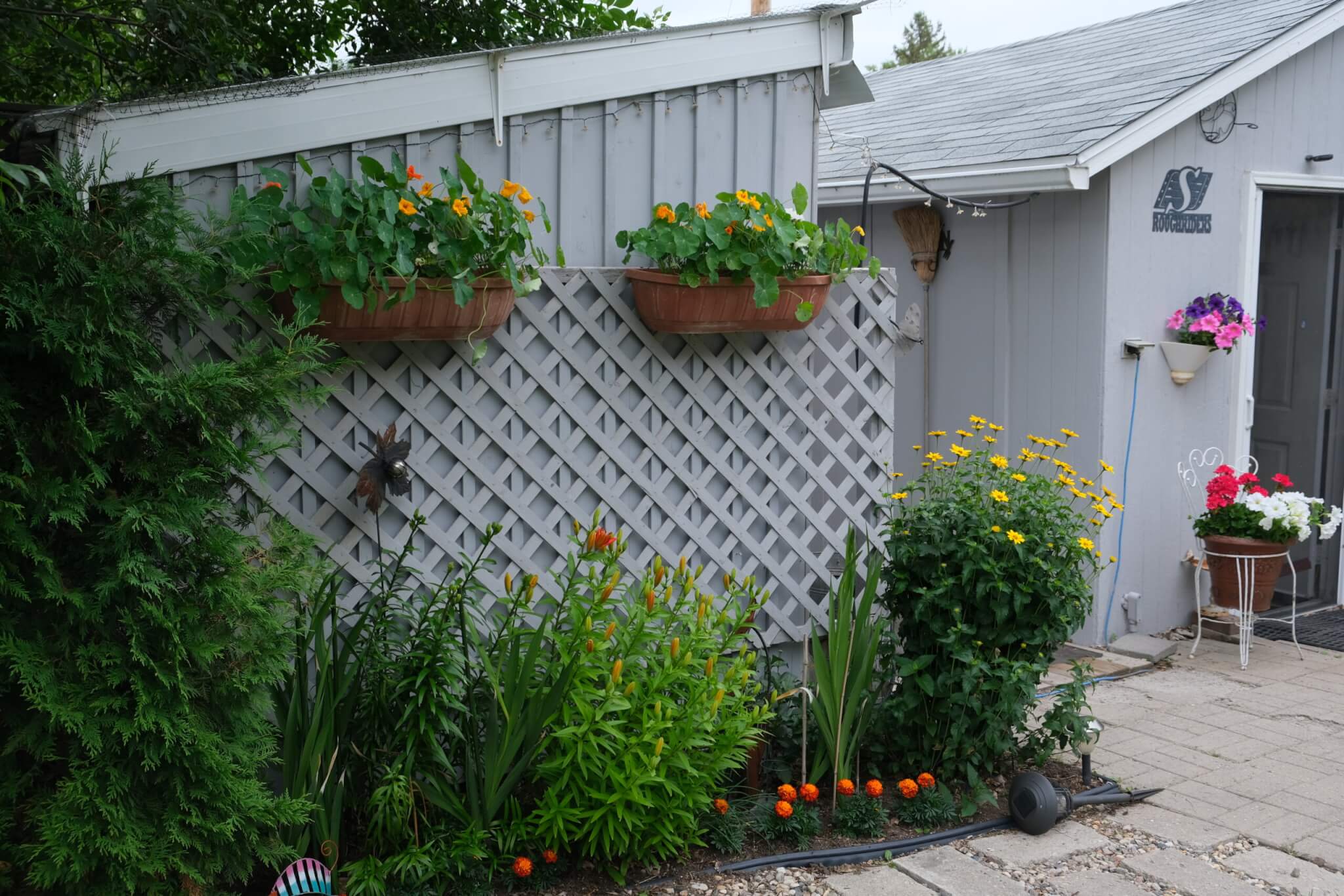
The beds on the main level of the garden are expanding steadily as Chris removes rows of paving stones. “I’d rather pull weeds than cut lawn,” Chris asserts. The hydrangeas, lilies and Turkistan burning bush are favourites in the couple’s English-cottage-style perennial borders. Scattered throughout are many decorative “found” objects that add to the fun of exploring this eclectic garden.
On the east side of the house a mixed garden teems with life. Scarlet runner beans reach for the sky on a trellis made of tree branches; perfumed sweet peas cover the fence and a giant summer squash dominates the centre ground. But this garden’s focal point is a delightful little storage shed, clad brightly in copper.
The metallic pieces are remnants from the 1950s, when copper tooling was a popular hobby. Most have come from local garage sales, although friends from as far away as Thunder Bay have added to the collection. A row of wooden pineapples, also gifts from friends, traces the shed’s roofline. “Pineapples are a symbol of hospitality,” Judith explains.
Hospitality in this garden extends to feathered visitors as well as human. The continuous birdsong confirms that the grain feeders, shallow baths and handmade bird houses here aren’t just decorative.
Chris repositioned the stairs connecting the terraced levels to encourage visitors to weave slowly through the garden. He notes that the “subtle orientations change” affects the sense of space in the garden.
At the base of the second staircase a delightful pocket garden gives rockery plants their favourite alpine scree-like conditions. The sedums, saxifrages, spring gentian and other low-growing plants here creep over and between a fascinating collection of rocks, testament to a geologist’s eye for interesting rock forms.
The last set of steps leads down to the alley, where Chris was forced to employ his guerrilla gardening skills. “We tried to rehabilitate what was there,” says Chris, to which Judith quickly interjects, “There’s no ‘we’ in this. Chris did it all!” It took three summers to conquer the creeping bellflower and grasses, but eventually Chris was ready to replant with a more pleasant jungle of drought-tolerant perennials and self-seeding annuals.
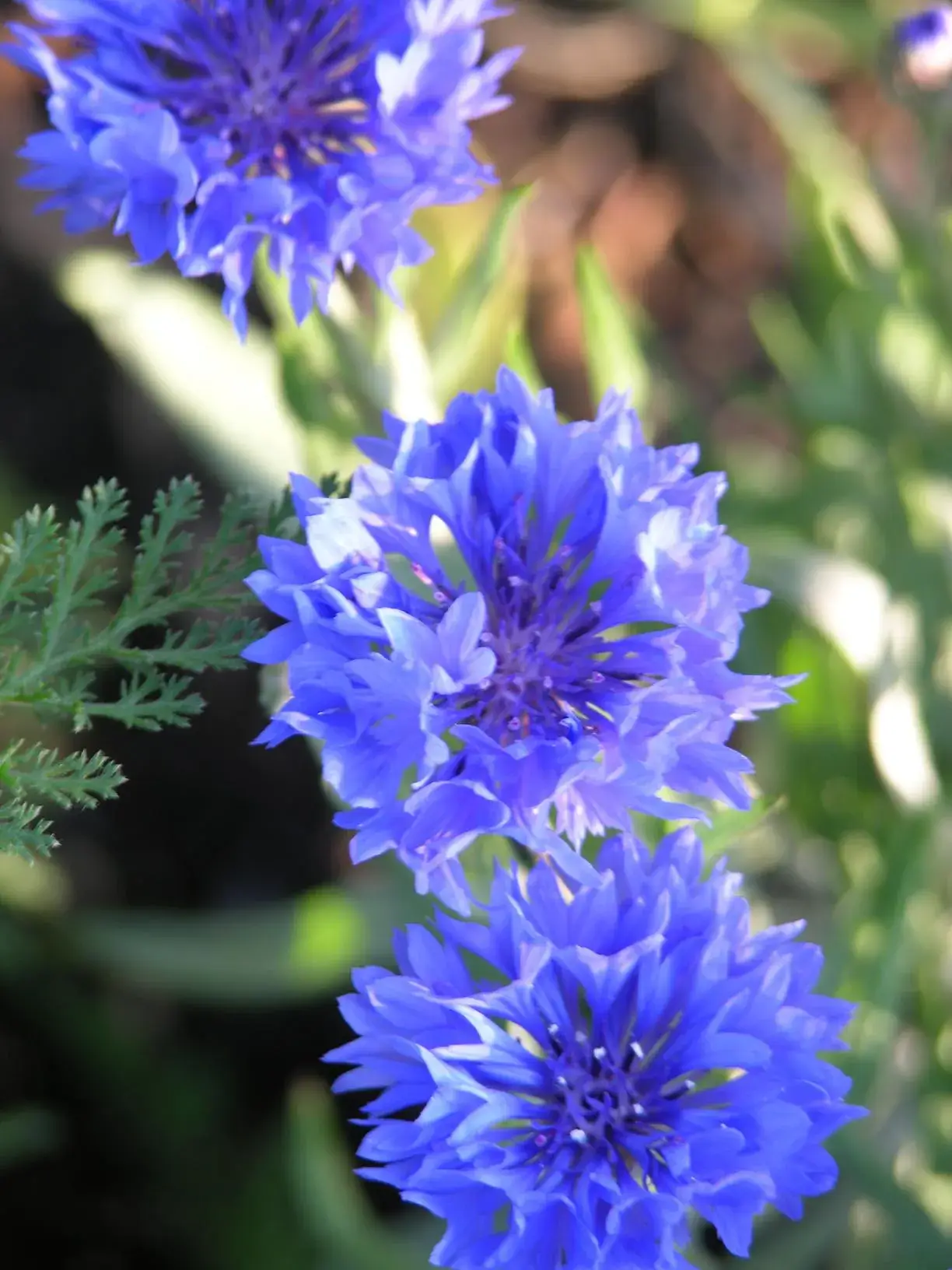
The result is a kaleidoscope of bright red hollyhocks and poppies, sunny calendulas, golden daylilies and knapweed, hot pink yarrow and sky blue bachelor’s buttons. The steeply terraced wall of colour delights passers-by on their way to the adjacent parkland.
Chris and Judith clearly find a genuine joy in their garden. They communicate a sense of pride and accomplishment without boasting as they share it with visitors. The ceramic pineapple by their door isn’t empty symbolism, and there’s much more to their beautiful garden than just lucky horseshoes.
Janet Jones is a graduate horticulturist and skilled gardener in Calgary.
*Originally published on Alberta Gardener 2007 Summer issue |