alberta gardener
manitoba gardener
ontario gardener
home button what is inside button events button article button cjob button advertise button question button

Info posted here on Monday,
following the Sunday show.

Did you know you can listen online?
Click here to access the CJOB audio vault, then enter the date and time of the show you wish to hear.

Previous Shows Archive
June 01, 2008
April 13, 2008
March 23, 2008
March 2, 2008
February 24, 2008
February 17, 2008
February 10, 2008
February 3, 2008
January 27, 2008
January 20, 2008
January 13, 2008
December 30, 2007
December 9, 2007
December 2, 2007
October 14, 2007
October 7, 2007

September 16, 2007
September 9, 2007
September 2, 2007
August 26, 2007
August 12, 2007
August 5, 2007
July 15, 2007
July 8, 2007

July 9, 2006

June 25, 2006

June 4, 2006
May 28, 2006
May 7, 2006
April 23, 2006
April 16, 2006
April 8, 2006
February 19, 2006
February 12, 2006
February 5, 2006
January 15, 2006
January 8, 2006
November 20, 2005
November 13, 2005
November 6, 2005
October 30, 2005

June 1, 2008

Well Good morning Gardeners. It’s another lovely day in Manitoba; a great day to work in the garden pulling weeds. Keeping the weeds in check now will stand you in good stead all summer as you pull up seedlings. And right now, the earth is still easy to work, so digging out the ones with the underground runner roots – these are called stoloniferous – is a bit easier than it will be later in the summer.

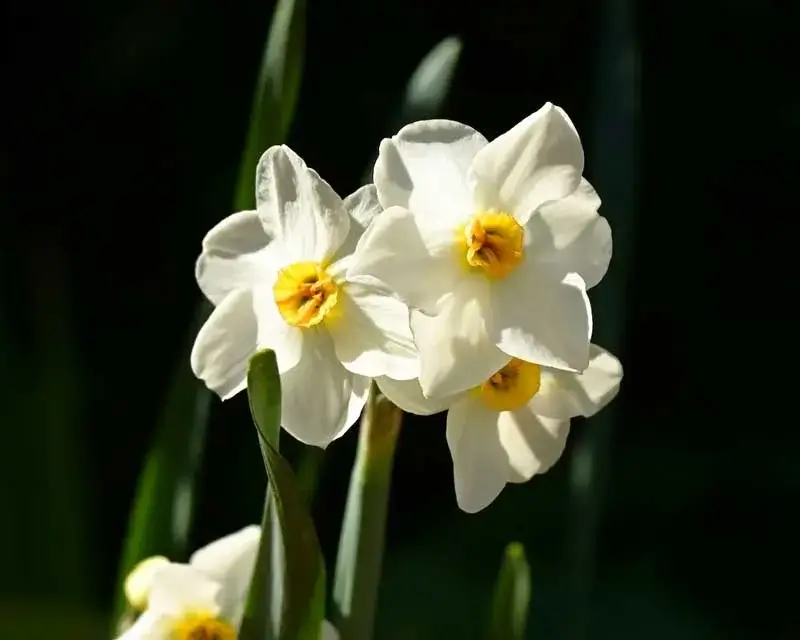
In my garden, the mid-season tulips are ablaze with colour although the daffodils are already beginning to fade, and the late season tulips are in bud. I see big fat buds on the Oriental poppies, too. The pretty little primula are throwing bright splashes of colour across the ground, competing with the forget-me-nots. I love their cheery little blue flowers. I’ll never forget how angry my daughter Lori was when her father-in-law, in what I guess he thought was an act of kindness, carefully uprooted and destroyed every forget-me-not from the garden of her new home, declaring proudly at the finish that he had “gotten rid of all those weeds”! She has never been able to get them re-established but I have an ocean of them a this time of year.

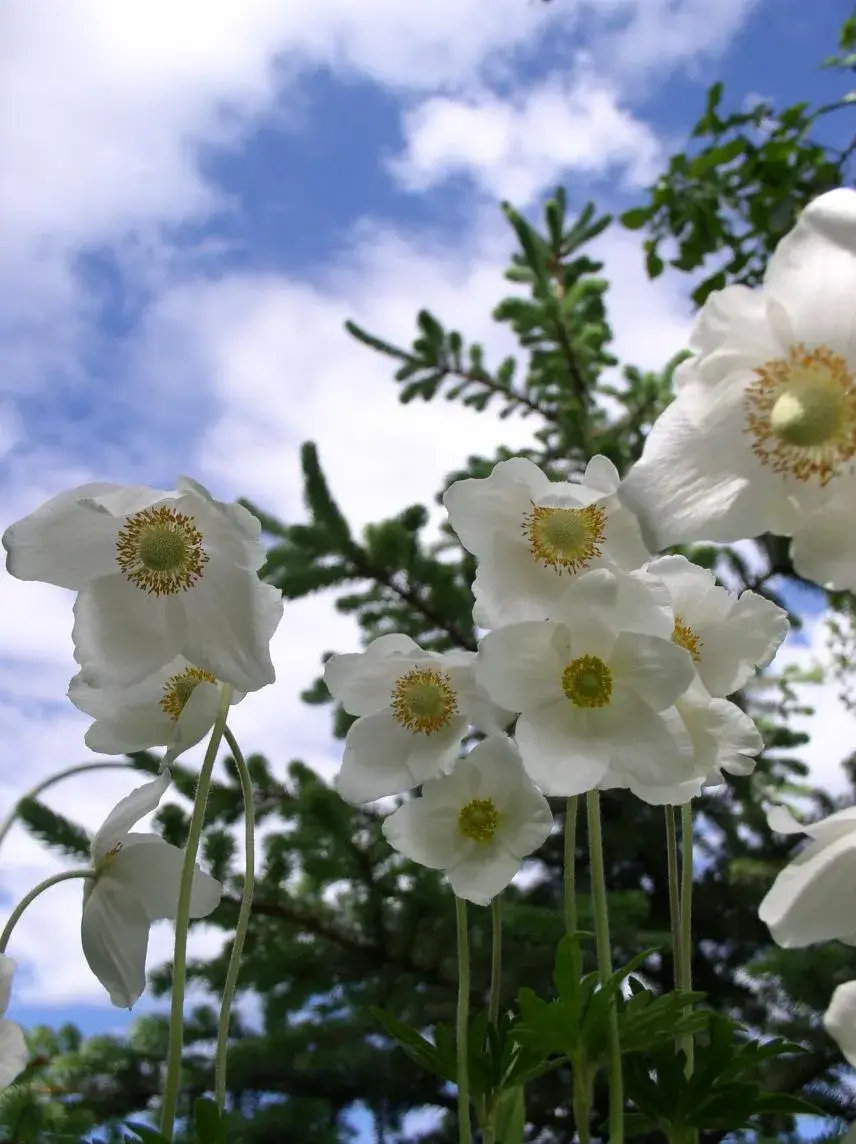
The hyacinth blossoms are sending out clouds of heavenly scent. The tiny wood violets are enjoying the limelight and the ferns are still tightly furled near the cones of hosta. This is one of those years where everything is happening at once. In the front garden, I see that some of the peonies already have well developed buds although still no sigh of flowers on the lily-of-the-valley, but Canada anemone is starting to bloom. This is one of those great plants that grows wild from coast to coast in meadows and damp wooded clearings. It has pretty lobed leaves out which emerge a shy, five petalled white flower with yellow centre. It blooms in June.

Soon the bleeding hearts will be sending out their drops of colour. Did you know that there are about 17 species of bleeding hearts in North America and eastern Asia? The nodding flowers of bleeding hearts bloom from May to late June, but like many woodland flowers they die back after blooming. They grow best in cool, rich soil that is moist but well-drained, and in partial to full shade.

Some of good varieties for our zone and even further north into zone 2 include ‘Aurora’, with creamy white flowers and green-grey foliage; ‘Gold Heart’, features stunning golden-yellow foliage as a backdrop for bright pink, heart-shaped flowers. ‘King of Hearts’ has green fern-like foliage with rosy red blooms; and Spectabilis is an old-fashioned variety with drooping pink or white hearts from bushy, light green leaves. By the way, I should mention that you can get a transcript of this talk at our web site at www.localgardener.net. CJOB also stores the broadcasts at its site, www.cjob.com. Just go to the audio vault to hear the show if you miss it any morning.


Marjorie Harris Apr 13, 2008

Well good morning gardeners. It’s another beautiful day in Manitoba. Spring is truly here, even though there is still some snow on the ground and a lots of frost in the earth. My early tulips are showing at last, although it is pretty cold this morning at -minus 4 , but it will climb all the way to the double digits by this afternoon.

I was at the symphony last night – another sell out performance with over 2,200 in attendance – and folks were telling me that their plants are very slow to emerge this year. Don’t panic. You’ll probably see them coming up soon as it gradually gets warmer.

Now as promised, I have a very special guest for you this week. but just before we get to her, I want to let you know about the fabulous masterworks concert coming up at the WSO on May 2 and 3. In addition to Mahler’s rousing 5th symphony, we’re presenting Tan Dun’s paper concerto. Tan Dun is the composer of the sound track from Crouching Tiger, Hidden Dragon.

Also, take Mom out for a real treat this year. Mark your calendars for May the 8, the date of the WSO’s Gala at the Fairmont Hotel, featuring the four Canadian Tenors. Call the WSO for tickets and details.

And for all you listener’s in Brandon, get out this afternoon to hear your Winnipeg Symphony Orchestra perform Beethoven’s 6th. Violinist Jinjo Cho will knock your socks off with Bartock’s Violin Concerto No 1 – I thought she would fly off the stage last night. And finally, the topper is Debussy’s lovely La Mer, the Sea symphony.

Well, to our special guest at long last. Marjorie Harris is with us this morning, all the way from Toronto, where she is getting ready to come to Winnipeg for Gardening Saturday at the Assiniboine Park Conservatory on April 26. Marjorie who writes the garden column for the Globe and Mail, has written well over a dozen gardening books – 15 I believe – has been a broadcaster and producer. She is also the Editor in Chief for Gardening Life, a lovely gardening magazine out of Toronto.

The garden centres are all gearing up for spring and I hope you have your planning issue of the Manitoba Gardener magazine with its lineup of what’s hot and where to find it this year. You can call 940-2720 to order your subscription if you don’t already have one or visit www.localgardener.net to order on line. Manitoba Gardener makes a wonderful Mother’s Day gift. That’s 940-2720 or if you’re out of town, toll free at 1-888-680-2008.

Potato Beetle March 23, 2008

Good morning gardeners! It’s another beautiful morning in Manitoba. It’s a bit chilly this second day of spring, but the sun is supposed to shine and that makes up for a lot. And Happy Easter to everyone and especially all the little egg hunting folk who plan to overdose on chocolate today.

To celebrate the holiday, last night the WSO staged a beautiful rendition of Verdi’s Requiem to a sold out house. And on April 3, for one night only, the orchestra is performing Richard Wagner’s stirring Die Meistersinger. Then on the 4,5, and 6th, Pops lovers will be thrilled by a salute to Broadway with many of our own players taking the solo parts and featuring stars from movies such as Beauty and the Beast, conducted by our own Rei Hotoda. And I want to thank all of you who have come out this year to hear our orchestra. Thanks to you, we have had a stunning season with 10 sellouts at home and out of town.

Well, if music keeps us happy during the winter, gardens are the balm for our souls in the spring time and summer. Your Manitoba Gardener will be in your mailbox this week containing a list of the year’s newest and most gorgeous plants, as well as stories on how to grow strawberries, combining colours and how companion planting works to help you avoid too many chemicals in the garden.

Now I’m not a fanatic about not using chemicals, but I seldom need them in my garden. As design goes, my garden falls under the category of English country. As much as I admire those tidy, well thought-out gardens of others, impulse always wins out and any design ideas I may have had at the outset give way to the inspiration of the moment. Yet it turns out that this is not a bad thing in keeping the garden pesticide free. Because there is so much diversity, it’s hard for any one bug or disease to take over. I also hand water with my garden most most of the time – for sheer pleasure as much as anything, because I get to spend time with my plants, admiring them at their peak and thinking about what is still to come – and this helps to keep aphids down as plants get a thorough washing once in a while. It also allows me to look closely and notice any problems before they get too serious. Often and infestation can be dealt with by simply removing the part of the plant that is infested or infected.

I plant intensely, mainly because I have a limited amount of room and I want to try everything I can to share with you, but this also has the benefit of keeping weeds down. You won’t see much bare earth in my garden and neither will the weeds. Which reminds me of a neat idea for all you cabbage and Brussel’s sprouts growers. try putting something green under your plants to deter the cabbage butterfly from laying its eggs on the plant. Apparently, it needs the contrast of the dark earth to detect the plant. You could use a green mulch or even a green burlap bag.

For the fellow that called about the horseradish, its companion in the garden is the potato. It’s said that if you plant horseradish with potatoes, it will discourage the Colorado potato beetle, a pest that also affects tomatoes, peppers, and cabbage. If you want to avoid this beast, which emerges from its winter quarters underground or in garden litter piles in May, you should be careful to keep your garden free of weeds such as lambs’ quarters, pigweed, smartweed and thistle, all of which act as hosts to the beetle.

If you’re wondering how to detect the potato beetle, the eggs are laid on leaves in yellow masses. The immature beetle, the larvae, is reddish with two rows of black spots down each side and the mature beetle is yellow with parallel black stripes on its back and black spots on its head. Apparently these pests are already showing resistance to chemical sprays in Manitoba, where the potato is a major crop.

Interestingly, a few years ago, scientists in New Brunswick fitted some beetles with radio transmitters and learned that they can “go like Dick”, travelling about two metres per second as they go from field to field in search of food.

This morning, we are going to leave pests behind and talk about something a lost more beautiful: orchids. Did you know that there are 38 native varieties in Manitoba? The Manitoba Orchid Society knows this, plus a whole lot more. With me this morning is Lorne Heshka, one of the foremost orchid men in the province. Good morning, Lorne.

Don’t forget to renew your subscription to Manitoba Gardener right now in time for spring. All subscribers will get a bonus right now of a $20 gift certificate to T & T Seeds and the Kackenhoff’s Garden Centre. And for you folks in Brandon, there’s a gift coupon to The Green Spot which is under new ownership. That’s a total of $60 worth of coupons you can spend if you like to travel – and you should in Manitoba.
Call 940-2720 to sig up. We take all major credit cards. That’s 940-2720 or go to www.localgardener.net and sign up on line.

Poison in the Garden Mar 2, 2008

Well, good morning gardeners! Another beautiful day in Manitoba. The sparrows were singing their hearts out this morning and someone told me that thy saw their first crow last week – only three weeks to go to the official start of spring. The sun rose at 7:08 this morning and won’t set until 6:18 – something that will change next week as daylight savings time now begins on March the 9th this year, but the days are definitely getting longer.

Well a garden plant has been making the news this past week with the ricin scare. A man who had checked into a hospital with breathing problems was found to have been in possession of ricin powder and some beans in his Las Vegas motel room. Ricin, a deadly poison, is derived from castor beans, a plant frequently found in large formal gardens in Manitoba. A tiny amount – just enough to fit on the head of a pin – can kill a human.

This got me to thinking of a few other deadly plants that we grow for their beauty in our gardens, One of them is the flower that is on the Beautiful Gardens cover, the last issue of Manitoba Gardener, the beautiful monkshood or wolfsbane. All parts of this plant are toxic, although the heavy duty stuff is in the unripe seeds and roots of the plant, but juices from the plant can do you in too. Use caution when handling this plant. In olden times, monkshood poison was used to poison the water supplies of the enemy. It causes burning, tingling in the mouth, then vomiting and finally death by asphyxiation.

Another potential killer is foxglove or digitalis, the source for the drug digoxin that slows heartbeat.

Mysteriously, many of the plants that feed us have toxic parts. Stay away from potato, tomato and rhubarb leaves, for example. The first two can cause you a very upset stomach and nervous excitement, the last can cause kidney problems and convulsions, even coma. The seeds of apples and pits of cherries, peaches and plums all contain cyanogenic glycosides, which, if enough were ingested, could kill you. In the case of apple seeds, you’d need quite a meal of them – hundreds might do the job.

Elephant ears are poisonous. Ingesting any part of this plant can cause swelling of the mouth or tongue, fatally blocking breathing. The same is true of dieffenbachia, once known as dumbcane for that very reason.

We all remember that it was hemlock that killed Socrates, but did you know that young larkspur, including delphinium, can be fatal and the seeds are also toxic. Both causie nausea, muscle twitches and paralysis.

Lilies are particularly fatal to cats. The bulbs of both daffodil and hyacinth are poison.

This is just a short list of the many plants that we commonly grow that have toxic properties and it is very important to note this now, at a time of devotion to natural remedies. Just because a pesticide can be created from plants found in your yard doesn’t mean that the product isn’t dangerous. If that were the case, then the product wouldn’t work.

Well, just a quick congratulations to the Manitoba Opera Association and our own Winnipeg Symphony Orchestra for putting on a wonderful concert last night. It was a feast for the ears with many old operatic favourites.


Dame’s Rocket and lupines Feb 24, 2008

Well, good morning gardeners! Another beautiful day in Manitoba. And it’s warming up! The highs all this week will be between zero and minus 10! Balmy weather compared to what we’ve been having.

It won’t be long now till we’re back in the garden coaxing the best out of the lovely things that grow there. One of these is an old fashioned plant called Dames Rocket or Sweet Rocket. It’s Latin name in Hesperis matronalis and it’s been growing quietly in my garden since almost the beginning. It may be that it volunteered, dropped there by a passing bird or maybe a bat, both of which like its seeds, anothe reason to grow this plant.

It’s not that Dames Rocket, which grows wild in Canada, is all that showy, although it is quietly lovely with loose panicles of mauve or white flowers on tall stalks. What really makes it stand out in the garden is its haunting scent, a bit like lilac, and because of this it is also often called night scented phlox. But it is not a phlox. Instead it is related to the brassica family which also contains food wonders such as cabbage and broccoli.

The other thing that stands our about the white variety of Dame’s Rocket or Hesperis matronalis is the luminescence of its flowers, which glow in the moonlight. And finally, it blooms on and on and on, like foxglove, adding new flowers at the top of its spikes. You will often see that the bottom florets have gone to seed while the tops are still putting out new blossoms. And it does self seed, not obnoxiously in my experience, but enough to keep the plant going for many years.

Another personal favourite is lupine, with its tall spikes of pea-like blossoms. Not only is this a very showy and long blooming perennial, lupines perform a valuable function in the garden by fixing nitrogen in the soil. Nitrogen, although the most abundant of elements, needs a vector to change it into a form that can be used by plants. Lupines grow wild in Canada and in some places are considered a weed. They mow them down in the ditches of PEI and they are the most common wildflower in B.C.. For some reason, though, I have always associated them with English country gardens. (They are actually native to North America.) The variety most grown in gardens here is the Russell hybrid and the flowers come in many colours from red to white to yellow, pink and mauve. Lupines are a fairly short-lived perennial, but they will self-seed if you don’t cut all the blossoms back and they will persist in the garden for many years.

By the way, I should mention that you can get a transcript of this talk at our web site at www.localgardener.net. CJOB also stores the broadcasts at its site, www.cjob.com. Just go to the audio vault to hear the show if you miss it any morning.


Apples Feb 17, 2007

Well, good morning gardeners! Another beautiful day in Manitoba. And what a treat the warm weather is for Festival du Voyageur goers!

Well first let me say a word about our beloved symphony. Natalie McMaster is in town for a series of three concerts – the last one this afternoon and she and the orchestra brought the house down last night. It was an outpouring of pure joy, with a full house and people dancing in the aisles to the fiddle music of the East Coast. Most of the tunes have roots in Scotland and the sounds sure resonated here. It’s wonderful to see so many people having a good time. His Honour the LG John Harvard and his wife Lenore were in the house and they seemed to have a great time, too. If you have time today, take in the afternoon concert. It’ll bring a smileyour face to this late winter day.

And speaking of late winter – you can see the cracks in it, can’t you? With the temperatures near the zero mark, it is clear that these longer days are already having an effect. and what a nice thing to have a long weekend to break up the monotony. As a business owner, I don’t begrudge my employees this Louis Riel Day. I just hope they have a wonderful time and enjoy it.

In the garden, this is a good time to think about pruning your fruit trees to remove any broken or dead wood and crossover branches. Fruit forms on second year wood in apple trees, so don’t prune off all the new growth, but just look to clean up the tree and open up crown areas. Light is needed to set fruit. Winter pruning, when fruit trees are still dormant, promotes new growth, so keep this pruning light to avoid an overabundance of water shoots an dense growth that will inhibit light penetration in summer.You can prune again in summer, before the end of July to thin out heavy growth. Summer pruning doesn’t stimulate new growth in the way dormant pruning does.

Most arborists do not recommend painting pruning wounds, but be sure to cut on an angle to let water run off, flush to the branch – don’t leave a knob – and use clean tools.

With the sun getting stronger, this is also a good time to prevent sun scald of tender trunks on young fruit trees – and evergreen for that matter. South facing trees are most at risk. Sunlight reflecting off unbroken snow does most of the damage, so go out and ruffle up the snow – or throw some sand or even a old piece of burlap on the snow in front of the tree to prevent the reflection.

Speaking of apple trees makes me think about the American legend, Johnny Appleseed, a strange little guy who travelled the northwest planting apples. Now apples, as you all know, do not come true to form from seed. Most apples are grafted trees because apples hybridize prolifically. But Johnny Appleseed – his real name was John Chapman – planted from sacks of seed gathered out East, so much of the product form his orchards was pretty sour fruit – what they used to call spitters. So why in the heck were his apple trees considered the first sign of civilization in much of the untamed frontier?

The answer is apple cider, the preferred drink of frontiersmen and so much a part of life that, at first, it was even overlooked by prohibitionists in their fight against booze. And instead of being on an altruistic mission, Johnnny Appleseed actually died a very rich man from his labours. He’d take his seeds down the waterways, stopping at likely spots and planting large orchards on the water front. When settlers showed up three or so years later, he sold his trees at 6 1/2 cents each.


Feb 10, 2008

Good morning Gardeners. It’s another beautiful day in Manitoba – cold and sharp as the edge of a knife, but crystal clear. It’s the kind of day that destroys your faith in global warming.

Well first a word of praise for the Winnipeg Symphony Orchestra, which had a wonderful New Music Festival this year. The highlight was Tuesday night with Guy Maddin’s film, Brand upon the Brain, narrated by the lovely Isabella Rosselini, while the orchestra played and Foley artists made the sound effects on stage. It was a profound experience. Kudo’s to Rae Hotoda who conducted for the full 94 minutes. Wow. But the whole week was outstanding and I am very proud of Alexander Mickelthwate and Vincent Ho for what they put together. It was interesting to hear all the garden themed music this week as well.

By the way, if you’re a member of the Canadian Club, you can meet Alexander and hear him speak at noon on March the 4th at the Canadian Club.

Well, I notice that the tulips are out in the grocery store florists, a definite harbinger of spring. And it brings to mind the story of how the Sultan Ahmed the third, who ruled from 1703 to 1730, lost his crown to his passion for tulips. Every spring, he held a festival and would import masses of tulips – literally millions of them – from Holland to celebrate his reign. These were the cream-of-the-crop tulips. If the petals had opened too wide, a silken thread was used to tie them into just the perfect position. Some of the bulbs were grown in gardens, but others were cut and placed in vases. Each variety was marked with a silver filigree marker. Among the vases, every fourth container held a lighted candle which reflected off the hundreds of mirrors placed throughout the garden. Songbirds sang from gilded cages and turtles carrying lighted candles added animation as they moved slowly through it all. Guests were asked to wear colours that would complement the tulips. A highlight of each evening came when the harem doors were thrown open and eunuchs carrying torches led a procession of the sultan’s beautiful wives through the garden. And this scene was repeated every night as long as the tulips were in bloom.

This spectacular display of extravagance ultimately led to a revolt that ended Sultan Ahmed’s rule, but what a sight it must have been! And in a way it’s easy to understand how flowers can excite such a passion. I am busy dreaming about it right now as I work on the early spring issue of the Manitoba Gardener. We’re looking at all the hot new plants for 2008 and then telling you where to find them. A couple of highlights: watch for a stunning hardy azalea called Mandarin Lights that you can grow here. It also comes in pink and yellow named Rosy Lights and Golden Lights. You’ll need fairly acidic soil and shade to enjoy the fabulous blossoms on this shrubby plant. There’s a new Gaillardia called Oranges and Lemons that is much more yellow than orange and another called The Sun, that is completely yellow.


Feb 3, 2008 Rabbit Habits

Good morning gardeners! It’s another beautiful morning in Manitoba. Not too cold – in fact, at -16 and going all the way up to -9 today it’s rather balmy – just the day for a walk in the snow to get some vitamin D from the sun.

Well last night was a very special night in Winnipeg. It was the opening night of the Winnipeg Symphony Orchestra’s New Music Festival, this year celebrating a program of all Canadian composers. We sang Oh Canada to get us in the mood and Happy Birthday to Canada’s grand old man of music, R. Murray Schaefer, whose 75 we were marking. What a fabulous collective voice we have as an audience. I hope CBC listeners enjoyed the broadcast! Then we listened to the World Premiere of Winnipeg’s own Glenn Buhr’s Symphony No. 3 . What a night! As you know the festival is on all week and tonight we’re at Westminister United Church with a beautiful program of choral music.

Well, there’s another kind of music going on in Winnipeg’s winter and I expect it will be at full blast today. I’m speaking of the patter of little feet through the snow as small animals come out of their burrows to forage for food. The squirrels are busy nearly every day unearthing their booty from last summer’s industry. They rise at dawn and are active until about noon, when they retire to their nests for a well earned rest. But just wait for a few weeks when mating season begins. The game of chase the squirrel begins at breakneck speeds through the trees which will be filled with their high pitched chatter that can sound like birds.

But the little fellows closest to home in our yard are the family of bunnies who live deep in the earth beside our foundation under our front steps. Nothing we can do will discourage them from this cosy place, heated courtesy of Manitoba Hydro and our good will. They have dug in and are there to stay and after a couple of years of plugging up their front door and having it re-opened the very next day, we have given up trying to dislodge them. Nor will I plant anymore astilbes in front of the door to hide the hole only to have them eaten in the lean winter months.

Rabbits don’t hibernate in winter – they grow a warm coat and stay active, foraging for food daily. Our bunny, and when he has a family, is one of those little guys from the bush. This winter he has beaten a path from under the steps, past the cedar tree and over the hill of shovelled-snow by the driveway, to the rose garden, where he nibbles what he can get at. But even more to his liking, are the left over plants still in planters that I optimistically left blooming until the first snowfall. He particularly enjoys the frozen parsley in the back yard. It hangs over the edge of its container in a convenient way at just rabbit height.

Soon it will be breeding time in rabbit country. They often start their first litter in February. Mama rabbit spends only about 5 minutes a day feeding her young – then she seals them up in a dead end warren until her next visit.

My garden is most vulnerable in springtime. The rabbits love my tulips, although planting daffodils seems to discourage them from the tulip beds. Daffodils are what have save the painted daisy from rabbit attentions these last few years. On the good news front, once the grass and especially the clover gets going well, they much prefer to eat that – it’s another good reason not to cut your lawn too short.


Jan 27, 2008 Pots and Containers

Well, good morning gardeners! Another beautiful day in Manitoba. It’s minus 15, just a nice temperature for a winter morning, not too cold and certainly not too warm, although I hate those slushy winter days when salty snow melt coats everything and the world looks dirty and gray.

Well, instead of dirty and gray, how about bright and sunny? I’m thinking about window boxes overflowing with colour. You know, window boxes have made a comeback in these past few years. My husband made ours and I think they are the most sensible design I’ve ever seen, Instead of a heavy, soil-filled box, Glenn made a frame the size and depth of the plastic trays you see in most garden centres. It has no bottom. He painted it the same colour as the house – matched our fading pink stucco perfectly, and mounted this sturdy, but light construction to the window frame with heavy duty screws and there they ave resided for the past ten years. Because they have no bottom, there is no rot. What’s more, because the soil is in removable plastic trays, changing it and planting the boxes is an easy task. I just take them out to work with them at convenient table height, then lift them back in, all fresh and planted. Last year, it was really convenient because it was pouring rain the weekend before I went to Malaysia for three weeks and. We did the planting inside the garage.

Well, here’s another consideration when you’re planting in containers. Think about the material the container itself is made from. It makes a difference to the growing climate and, of course, to the potability of your planted pot.

The choice include unfinished terra-cotta, glazed terra cotta, fiberglass, metals, cast stone, concrete, hypertufa, wood and plastics. Unfinished terra cotta is always a good choice, It’s inexpensive and looks great, I t is also a porous material that lets the plant roots breath, however, this also means more frequent watering. Terra cotta can also be fragile. Pots need to be emptied in winter. Glazed terra cotta resolves the issue of frequent watering, but they can be heavy and are still fragile. However the glaze can be very beautiful.

Fibreglass pots are mixed with plastic strands and can come in interesting designs made to look like stone or cast iron. They are light weight but have a tendency to chip or crack after prolonged use.

Plastic has come a long way and now can be made to imitate metal or stone so well that it’s impossible to tel without touching the pot. Impermeable walls mean less watering, but if your plant likes a dry climate, the may not be a good thing. If they are planted up with soil-less mix, they can be too lightweight when they dry out and can be blown over by the wind.

Metals are beautiful and authentic, but rust is inevitable and they can heat up too much, damaging plant roots. Cast iron is heavy buy many metal plants today are coated sheet iron, making them much lighter and easier to move.

Hypertufa are do-it-yourself pots, generally made from a mixture of concrete, peat moss and sand and often moulder over chicken wire or even old plastic pots. These containers are light-weight and weather proof and look very authentic.

Wooden containers are very attractive, drain well and lend a rustic look to a country garden. However, they do eventually break down – even the cedar and even the treated half barrels, will need to be replaced periodically. However, they are weather-proof and not as heavy as stone or metal.

Cast stone or concrete pots are extremely heavy. Cast stone is stronger and less permeable than concrete. It is also expensive and impressive looking. Good moulded concrete imitations can be very effective as well. We cover our concrete pots with plastic garbage bags in winter to precent the freeze and thaw action that moisture can cause in spring and that can crack even the heaviest concrete.

There are also ceramic pots, generally reserved for indoors, although I have some big old Chinese 100-year-egg pots that I use outside for plants such as elephant ears that need a wet climate because these pots have no drainage holes.

A Tip from Mr Tomato: Listeners should know that vines in general hate to be transplanted so they should be started in PEAT POTS which can be set directly into the ground without disturbing any roots.  Since morning glory grows very, very quickly from seed--often germinating in a few days--plants shouldn't be started more than two weeks before planting out.


Jan 20 2008 Garden Myths

Well, good morning gardeners! Another beautiful day in Manitoba. I know it’s cold, but somehow that makes me happy. While I don’t want it to stay this way for too long, I find these cold spells very rejuvenating! It appears a lot of other people feel the same way. I went to the Symphony last night – usually our least well attended of the year and thinking with the cold there would be a pretty small audience – but no so! Just about 1,700 brave souls came out to hear Tchaikovsky and the other pieces. One of them was the Canadian composition by Cha Ka Nin that Vincent spoke about last week and it was stunning! We’ll hear more of him att the New Music Festival coming up the first week in February.

Well, today, we’re going to hear about garden myths – such as sun shining though water will burn leaves. Wrong. The sun just isn’t strong enough and anyhow, when you think about it, plants would be in an awful lot of trouble in the wild when it rained if this were so!

People are often told they should paint over a newly pruned tree wound. Wrong again. In fact going this can actually encourage the growth of fungal disease because the paint or tar of varnish holds in the moisture near the wound promoting the growth of fungal decay organisms. Just make a clean cut with a clean tool an let the tree initiate it own healing properties.

Number 3: If a plant is under stress, feed it. Wrong. fertilization when a plant is stressed can actually harm it by stimulating growth when it should be dealing with healing. If you plant is stressed, try to correct the problem. Check for insect infestation, compacted soil, too much or too little water, and deal with this first. Then, once it perks up, you can feed it.

Number 4. Natural pesticides are less harmful than synthetic ones. Duh! They wouldn’t work it this were so! Keep them away from pets and children and use sparingly. Remember, th best defence against insects and disease is a healthy plant.

Number 5. Add sand to loosen heavy clay soil. Answer: Only if you want cement! Add organic matter such as decayed leaves, peat moss, even wet, shredded newspaper, then add sand if you need to add mineral content. Organic materil is what will give your soil the light fluffy consistency.

Number 6. Always dig a hole twice as deep as the root ball. This is something my husband believes? Fact is, the hole should be twice a wide, not as deep. Make the planting hole just a little deeper than the plant or to the top of the spoil in the plant’s growing pot. Back will with the soil you removed the soil, not with potting soil or peat moss. You want to encourage the roots to grow in its natural new medium and the original soil will also provide stability to large plants such as trees.

Finally, you may believe that drought tolerant plants don’t have to be watered, but even these plants need help when throughout the first year they are planted and while they are generally pretty self-reliant after that, it’s a good idea to give them the occasional drink when the weather has been extra dry or at least cover their root zone with a little mulch. After all, in the wild the ground around them would be covered with grass or other plants.


Jan 13, 2008 Life in winter

Well, good morning gardeners! Another beautiful day in Manitoba. It was lovely last night to see the snow softly falling on the streets, keeping them clean and adding another layer of protection for all those plants that are sleeping down there. I like to think about them, warm and snug in their winter bed, dozing until genetics, warmth and longer days wake them up in spring.

Scientists have a name for being under the snow: they call is subnivean, and this is where some insects and reptiles overwinter, while others burrow deep into the earth to avoid freezing. Did you know that certain frogs withstand winter in much the way plants do, going into a deep sleep, completely frozen, with everything shut down including the innermost reaches of the heart? They are kept live by a sugar based antifreeze that they produce which helps to control the way ice forms and prevents damage to cells.. But just a short distance underground, temperatures remain well above freezing. Some shrews and mole overwinter just six inches under the surface, where it is warm enough for them, with their high metabolic rate, to survive.

But it’s above the ground that we see our winters and to miss the beauty of a hoar-frosted day would be a sad loss. There was a wonderful such day last week, when the trees wore a garment of sparkling white and the world was alive with winter music – you could hear the sound of ice crystals in the air. We take these things for granted, but imagine if you lived in the south and saw this for the first time – it must be awe-inspiring.

So we are so lucky to live in this fabulous four season climate and while we have to put away our gardening tools for the winter, we have all these compensations, one of which is to dream of the glorious burst of colour that summer brings.

We also have houseplants and it is around now that some of them will begin to show signs of regrowth, especially is they are getting enough bright light. This is because the days are growing longer – we have already gained a half hour of daylight since December 21. By the end of the month, that will have grown to a full hour and by February 28, the day, including twilight, will be almost 12 hours long. And by the way, in case you didn’t know, 2008 is a leap year. If your houseplant is beginning to show new growth, you can take that as a signal to increase watering and even to add a bit of fertilizer. but generally, it will be February or March before you see the amaryllis put out stalks – remember to lay the bulb or the potted plant on its side to encourage the stalk to emerge before the leaves and ensure you have a great crop of blossoms.

And if you’re desperate right now to get out and do something in the garden, well you can always shake the heavy snow off your evergreens and rough up the snow in front of south facing trees to help prevent winter burning. This is an especially important in March.

Now, this morning, I have a special treat in store for you. We are going to meet Vincent Ho, the new composer-in-residence at the Winnipeg Symphony Orchestra and Vincent is going to share some of his insights into the subject of music and the garden. Vincent just moved here from Edmonton this past fall to take up his new post at the WSO, and he believes that the way Canadians make music is different from the way most of our southern neighbours do because of our affinity with nature.

To listen to this show, go CJOB.com and click on audio vault, turning the time in the window to 9:00 am Sunday, January 13. The show actually starts about 9:08.
- Dorothy

Speaking of wonderful reading material – have you got your Dreaming issue of Manitoba Gardener yet? If not, look for it on a newsstand near you or call us for a subscription at 940-2720. This issue contains a story on yellow flowers for the garden as well as a diagnostic of evergreen problems. If you’re wondering what roses to plants, we tell you about seven trouble-free varieties that grow easily here and you can find out how to start your garden from seeds. That number for subscriptions again is 940-2720.


Dec. 30, 2007 Stuff You Never Knew You Needed to Know

Well, good morning gardeners! Another beautiful day in Manitoba and almost the end of 2007. I hope it’s been a good year for you, but even more, I hope 2008 is even better and that your gardens will glow with all the magic a Manitoba summer can muster.

Here in the dark of winter, it is thrilling to close our eyes and dream of golden sunshine on emerald grass while luminescent flowers are teased by bumbling bees and bright butterflies. I can almost feel the cool of dappled shade on my hot cheeks as I luxuriate in a frenzy of weed-pulling under the ash tree that volunteered its services five years ago. It takes no special imagination to conjure up images of pale blue Veronica spiking through the clumps of yellow helenium, or to see the fat marshmallow buds of peonies just beginning to explode into bombs of pink or white or red. I can almost smell the indescribable scent of lilacs as they compete with the heady perfume of valerian.

In my mind’s eye, I see myself in the garden, always on my knees, paying homage to the earth, I guess, although it appears that I have a serious garden mission in mind. Truth is, I just like being down there, especially in springtime, when the earth is generously open to a gardener’s rude probing. It gives way so easily then to divisions and plantings. When I am there in the garden, spending aimless hours watering with a hose for the sheer pleasure of watching the silver droplets absorb into the thirsty soil, time ceases to exist, all ills are cured and I escape to another dimension.

I notice things then that pass me by at other times. I hear the birds speaking their lyrical tunes. I hear a hum of insects rustling through leaves and stems and maybe even burrowing in the earth for all I know. The plants make sounds too, responding to the wind and the sun. And I see things: tiny insects usually invisible, little odd activities of industrious ants or absurd things such as the greedy bumblebee last spring that had collected so much pollen from my crocuses that he could barely fly and instead wobbled away to the hive. I’ve seen the lovely goldenrod spider, white with red marks on his abdomen, sitting on a rose petal waiting for prey to happen by. This is the only Canadian spider I know of that can change colour from white to yellow, a process that takes a couple of days but which allows it to hide on yellow flowers such as its namesake goldenrod.

I love mornings in the garden when the dew is still fresh and the sun is just rising. I love the way the slanted rays look shining through leaves or blossoms. As night passes and day dawns, I am always left with a feeling that something mysterious has been put away and I welcome the bright intrusion.

I am truly a day time person. In the late afternoon, I want to hang onto the daylight as long as I can and I will stay in the garden until it is impossible to see anything. I don’t feel the aching back or rose-scratched arms or red, chafed knees until the days is done and I’m inside.

Not that I don’t appreciate winter with its pristine cloak of white, frosting the trees and sheltering the plants from the bitterest cold. What can be lovelier that the form of a leafless tree, blackly etched against the sky, standing bole-deep in snow? Who has not heard and loved the crunch of boot on snow echoing through the clear air. And how could anyone resist the sunlight as it picks out diamonds and all manner of other lovely jewels from the stark whiteness?

So here’s to you, listener, and your lovely garden next year, whether it be winter or summer. And if perchance you are not one to dabble personally in the green arts, take heart. You are still a participant because your appreciation is part of our joy.

I’m Dorothy Dobbie, publisher of the Manitoba Gardener magazine on CJOB.

Here’s a Bunch of Stuff You Never Knew You Needed to Know:
Did you know that you can grow impatiens in full sunlight? To do this, just make sure that they are adequately watered. And if you have them in the sun between 12 and two, then you’d best be growing them like they do at Epcot centre at Disneyworld: floating in a pond, using a wire, moss-filled basket to create a ball of blossom.

We’ve all heard the saying that Music hath charms to soother savage breast, but can it do the same for plants? It seems that the answer to this is still inconclusive. While there are many experiments that seem to show a correlation between the type of music played and how plants flourish, the research tends to be scientifically flawed. On the other hand, there are so many experiments that do show a correlation that, though the experiments are scientifically flawed, the jury is still out. And in the studies that show a correlation, the music plants respond best to is soothing classical, especially strings, some jazz and some country and western. Hard rock appears to have a negative effect. But maybe it’s all just wishful thinking . . .

Talking to Plants
So what about talking to your plants? Does this have any measurable effect? Well, I now of lots of people who swear that talking to their plants encourages good growth but just as with the music issue, there is no hard scientific evidence to back this up. Still, one can hypothesize that talking to your plants does have some impact if only through the changes talking makes to plant environments. For example, talking releases carbon dioxide into the air and plants use carbon dioxide in the process of photosynthesis. Talking may also create changes in temperature, humidity, air movement and vibration that can affect plants. So go ahead and talk all you want. It appears that the plant is getting some benefit and you are probably getting even more.

Plant Nutrition
Speaking of what plants need for growth, the three main ingredients are light, water and nutrients and light has far and away the greatest influence. The nutrients are mineral – the big three: NPK or nitrogen, phosphorous and potassium or potash, are backed up by a long list of micro nutrients, including things such as iron, copper, manganese, calcium, nickel and many others. Right now, phosphorus, responsible for encouraging strong root development and better blooms and fruit, is under the microscope of provincial legislation because of serious algae bloom in our lakes and stress. Phosphorous is being limited for use as a lawn chemical in the province, although no restrictions have yet been placed on the product in agricultural use.

Sea Magic
You have often heard us talk about Sea Magic on this show and about how it breathes extra energy into plants and the reason for this is that it contains a long list of micro nutrients, available to the plants as an organic compound, sea weed, breaks down. Because, while organic material itself is not a source of nutrition for plants, the bacterial activity surrounding its decomposition helps plants use the nutrients that are available. And when it comes to nitrogen which makes up about 80% of the earth’s atmosphere, the only form available for plant use comes from the fixing of soil nitrogen by legume plants such as peas or beans or even caraganas, from crop decomposition, from manure or from commercial sources. While it is true that a few freelancing bacteria in the soil can also convert a small amount of atmospheric nitrogen, the amounts are small. Lightening also changes atmospheric nitrogen into plant useable material.

Other Plant Addictions
Give your paperwhites a daily cocktail of water and 5% alcohol and see them straighten up and grow right. It’s true. Researchers at Cornell University have found that forced paperwhites, which are notorious for growing too tall indoors and flopping over; grow straighter and sturdier when watered with a 5% alcohol solution. Be careful, though; at 10%, the alcohol starts doing serious damage to the plants, and at 25% it becomes lethal


Dec 9, 2007 New Plants

Good morning gardeners. And what a lovely crisp day in Manitoba. The air is sharp and clean, although the tires are square! It’s minus 24. But take heart. As one symphony goer said to me last night, “When it’s this cold, I know the world’s all right.” He was speaking about that nagging fear we all have about global warming.

And yes, cold weather people is who we are, we Manitobans. Like many native flowers, we need a cold streak in order to bloom in the spring. The cold weather sharpens the senses, enhances our perceptions, and puts a zing in our step – you have to step fast in this weather or you’ll freeze your toes!

And this is when I really appreciate receiving garden books and catalogues. I have time to pore over them, looking for the next big thing and being surprised and excited all over again by plants I haven’t grown for a while. Right now, I am working ahead on the early spring issue of Manitoba Gardener, the “Planning” issue, where we will carry some of the hot, new plants for spring. We will do this again in the Spring (Planting) issue, and I have some interesting plans for you this year. We have a special focus on alpine or rock garden plants. These are the small, exquisite plants that you have to get up close and personal with unless they are mass planted – but more on that later.

For now, I just can’t wait to tell you about some of this year’s finds. For example, a new variety of echinacea will be on everyone’s must have list. It is double- blossomed with an Easter bonnet top over a fringe of regular petals. Although most descriptions call it white, it’s a cool pineapple yellow, almost green, with a centre of gold, and it’s called Echinacea ‘Coconut Lime’. Last year’s Echinacea ‘White Swan’ is worth a second look as well – it has pure white petals and illuminate a garden with their purity.

Ground covers are always popular and the most interesting one I’ve found in a long time is Ajuga ‘Toffee Chips’, a small creeping ground cover with oval to elliptical foliage of light mint green, bordered in cream to white. The toffee comes in with the new growth, where the tender new leaves are edged in brown and khaki. This striking plant would be lovely next to its cousins Ajuga ‘Purple Brocade’ or Ajuga ‘Burgundy Glow’. Watch for Ajuga ‘Toffee Chips’ next summer. (I did carry it in Manitoba Gardener in the fall issue). Although Ajuga gets striking blue flowers in sun to part shade, it is mainly grown for its masses of lovely foliage on small 6-inch tall plants.

An old favourite, but worth revisiting is the shade plant, Brunnera ‘Looking Glass’. This Brunnera has large heart-shaped silvery leaves. If forms good sized clumps and could show off your silvery-leaved Heuchera to good effect. The common name for the species Brunnera is Siberian bugloss or Siberian forget-me-not, so called for its clouds of small blue flowers set high above large heart-shaped green leaves. A useful shade plant in the shade garden, it has been extensively hybridized. Also look for Brunnera ‘Jack Frost’, another silvered variety with a stronger green vein and a more rounded leaf. This variety is hardy all the way to zone 2.

Finally, look fort Scabiosa ‘Ultra Violet’. Scabiosa is such a wonderful performer in the garden, blooming its heart out all summer, producing pin-cushion like flowers and a wonderfully glowing green, pineapple-shaped seedpod. Although its called ‘Ultra Violet’, the 2-inch flowers are actually more of a cobalt blue, growing on 24 to 30 inch slender stalks. This one may be in short supply so if you are lucky enough to see it, snap it up immediately. And if you can’t find ‘Scabiosa ‘Ultra Violet’, take any scabiosa you can find. You won’t be disappointed.

Dec 9, 2007 New plants (Part 2)

Good morning gardeners. And what a lovely crisp day in Manitoba. The air is sharp and clean, although the tires are square! It’s minus 24. But take heart. As one symphony goer said to me last night, “When it’s this cold, I know the world’s all right.” He was speaking about that nagging fear we all have about global warming.

And yes, cold weather people is who we are, we Manitobans. Like many native flowers, we need a cold streak in order to bloom in the spring. The cold weather sharpens the senses, enhances our perceptions, and puts a zing in our step – you have to step fast in this weather or you’ll freeze your toes!

And this is when I really appreciate receiving garden books and catalogues. I have time to pore over them, looking for the next big thing and being surprised and excited all over again by plants I haven’t grown for a while. Right now, I am working ahead on the early spring issue of Manitoba Gardener, the “Planning” issue, where we will carry some of the hot, new plants for spring. We will do this again in the Spring (Planting) issue, and I have some interesting plans for you this year. We have a special focus on alpine or rock garden plants. These are the small, exquisite plants that you have to get up close and personal with unless they are mass planted – but more on that later.

For now, I just can’t wait to tell you about some of this year’s finds. For example, a new variety of echinacea will be on everyone’s must have list. It is double- blossomed with an Easter bonnet top over a fringe of regular petals. Although most descriptions call it white, it’s a cool pineapple yellow, almost green, with a centre of gold, and it’s called Echinacea ‘Coconut Lime’. Last year’s Echinacea ‘White Swan’ is worth a second look as well – it has pure white petals and illuminate a garden with their purity.

Ground covers are always popular and the most interesting one I’ve found in a long time is Ajuga ‘Toffee Chips’, a small creeping ground cover with oval to elliptical foliage of light mint green, bordered in cream to white. The toffee comes in with the new growth, where the tender new leaves are edged in brown and khaki. This striking plant would be lovely next to its cousins Ajuga ‘Purple Brocade’ or Ajuga ‘Burgundy Glow’. Watch for Ajuga ‘Toffee Chips’ next summer. (I did carry it in Manitoba Gardener in the fall issue). Although Ajuga gets striking blue flowers in sun to part shade, it is mainly grown for its masses of lovely foliage on small 6-inch tall plants.

An old favourite, but worth revisiting is the shade plant, Brunnera ‘Looking Glass’. This Brunnera has large heart-shaped silvery leaves. If forms good sized clumps and could show off your silvery-leaved Heuchera to good effect. The common name for the species Brunnera is Siberian bugloss or Siberian forget-me-not, so called for its clouds of small blue flowers set high above large heart-shaped green leaves. A useful shade plant in the shade garden, it has been extensively hybridized. Also look for Brunnera ‘Jack Frost’, another silvered variety with a stronger green vein and a more rounded leaf. This variety is hardy all the way to zone 2.

Finally, look fort Scabiosa ‘Ultra Violet’. Scabiosa is such a wonderful performer in the garden, blooming its heart out all summer, producing pin-cushion like flowers and a wonderfully glowing green, pineapple-shaped seedpod. Although its called ‘Ultra Violet’, the 2-inch flowers are actually more of a cobalt blue, growing on 24 to 30 inch slender stalks. This one may be in short supply so if you are lucky enough to see it, snap it up immediately. And if you can’t find ‘Scabiosa ‘Ultra Violet’, take any scabiosa you can find. You won’t be disappointed.

Dec 2, 2007 Cold and Garlic

Good morning gardeners. Well it’s another lovely crisp day in Manitoba. I love the sharp freshness of the air, the way it cleans everything. And I’ve been thinking that if this is the be the coldest winter across Canada for 15 years, how it may solve some of the foreign pest problems. For example, I wonder how the cold will affect the emerald ash borer and the Asian long-horned beetle, two bugs that have been threatening Ontario’s forests and which were predicted to be coming our way in the near future. I wonder if this cold winter will put an end of the terrible cycle of Mountain pine beetle which have been devastating B.C. forests. It appears that we are looking at 100% mortality at minus 37 or so. And perhaps there are other pathogens out there that need a good killing cold to keep us safe, so let’s cheer for the cold like true Manitobans and understand that it can help us even while being annoying.

But what about my lovely zone 4 and 5 plants, you cry. Well, chances are they will be just fine, especially if they are well covered by snow. The ground temperature may quite a few degrees warmer than the air under that warm blanket.

I was at Schriemers yesterday for their open house and a lady asked me about cutting back plants – is it better to do this in spring or fall, she asked. My answer to her and to all of you is that, in our climate, it is safer to do this in spring because leaving up the stalks helps to collect snow at the root zone and the leaves provide a winter home for ladybugs. As well, much of the herbaceous materials break down and are returned to the soil over winter. Still, if you needs things to be neat and tidy, then cut the plants down, but try and leave at least six inches of stalk as a snow collector.

In most cases, the damage is done during a late fall or a particularly changeable or sunny spring. Plants exposed to sunlight will be susceptible to the freeze/ thaw cycle that is very damaging. Sunlight can cause tree trunks to split – especially young trees with their tender bark.

Now is the time to start thinking about that garden for next spring and I have been thinking about a lovely double cosmos that Kevin Twomey from T & T Seeds gave me. This was a truly lovely flower with shell-shaped petals in a rose pink. Look for the seeds this spring.

Yesterday, I ran into a gardener named Bill, from Transcona. Bill is a very dedicated gardener who makes his own compost and he told me that the garlic recipe in the book “Carrots Love Tomatoes” is the best way he knows to discourage deer and rabbits. He also uses Nilodour to keep bears away at the cottage. But it’s the garlic that has captured my imagination. It is such a versatile and beneficial plant.

Last month, the New York Times reported that garlic boosts production of hydrogen sulfide, a powerful anti-oxidant that relaxes blood vessels and increases blood flow. It protects against various cancers, including breast, prostate and colon. It also protects the heart.

Too much of this stuff can be toxic – and it smells like rotten eggs – but it is part of the chemistry of the body. You need about two medium -sized cloves og garlic a day and if you’re worried about smell, try chewing on fennel seeds or a handful of parsley to deal with that problem.

Trees
Speaking of trees, did you know that I publish a magazine called Canadian Trees? It’s all about trees where people live. Did you know that trees can sometime kill each other? Do you want to learn how to set up a tree protection group in your neighbourhood? Do you know which trees to grow in groups and which trees like to have space to themselves? Call 1-888-680-2008 or 940-2720 to order a subscription or just add a Canadian Tree subscription to your Manitoba Gardener gift order this year. That 1-888-680-2008 or 940-2720 to order or find us online at www.localgardener.net

Manitoba Gardener
The gift giving season is almost upon us and you’re probably already thinking about what to buy your favourite gardener for Christmas. Here’s the easy anser: Send a subscription to Manitoba Gardener or if they’re out of town, order Alberta Gardener or Ontario Gardener.

Top up your gift with a fabulous Shelmerdine Plant and Garden Guide which contains over 3000 plants complete with pictures that you can buy and grow right here in Manitoba. Or order Canadian Trees. Call 1-888-680-2008 or locally 940-2720 to order today. We’ll send out a gift card in time for Christmas. That -1-888-680-2008 or localy 940-2720/ Or visit us on line at www.localgardener.net