alberta gardener
manitoba gardener
ontario gardener
home button what is inside button events button article button cjob button advertise button question button

Growing & sculpting on Lake Huro

Story by Helen Lammers-Helps
Photos by Shauna Dobbie

For Clare Esselment and Collie Chisholm, gardening is about community. Their home, located in a small hamlet near Sarnia, faces Lake Huron on one side and a quiet gravel road that services the community on the other. “We do it for our neighbours,” explains Clare. Those passing by often stop to enjoy the gurgling stone fountain at the roadside entrance to their garden. If Clare is in the yard working on one of his stone carvings, they will often stop to chat.
“The garden integrates with so many things – community, bird life, stone . . . and us,” asserts Clare. “It’s an extension of ourselves,” adds Collie. “It shows our appreciation of Mother Earth.” For Clare and Collie, gardening is a means of connecting with others. Many of the plants have been donated by friends and neighbours and visitors are often rewarded with similar offerings.
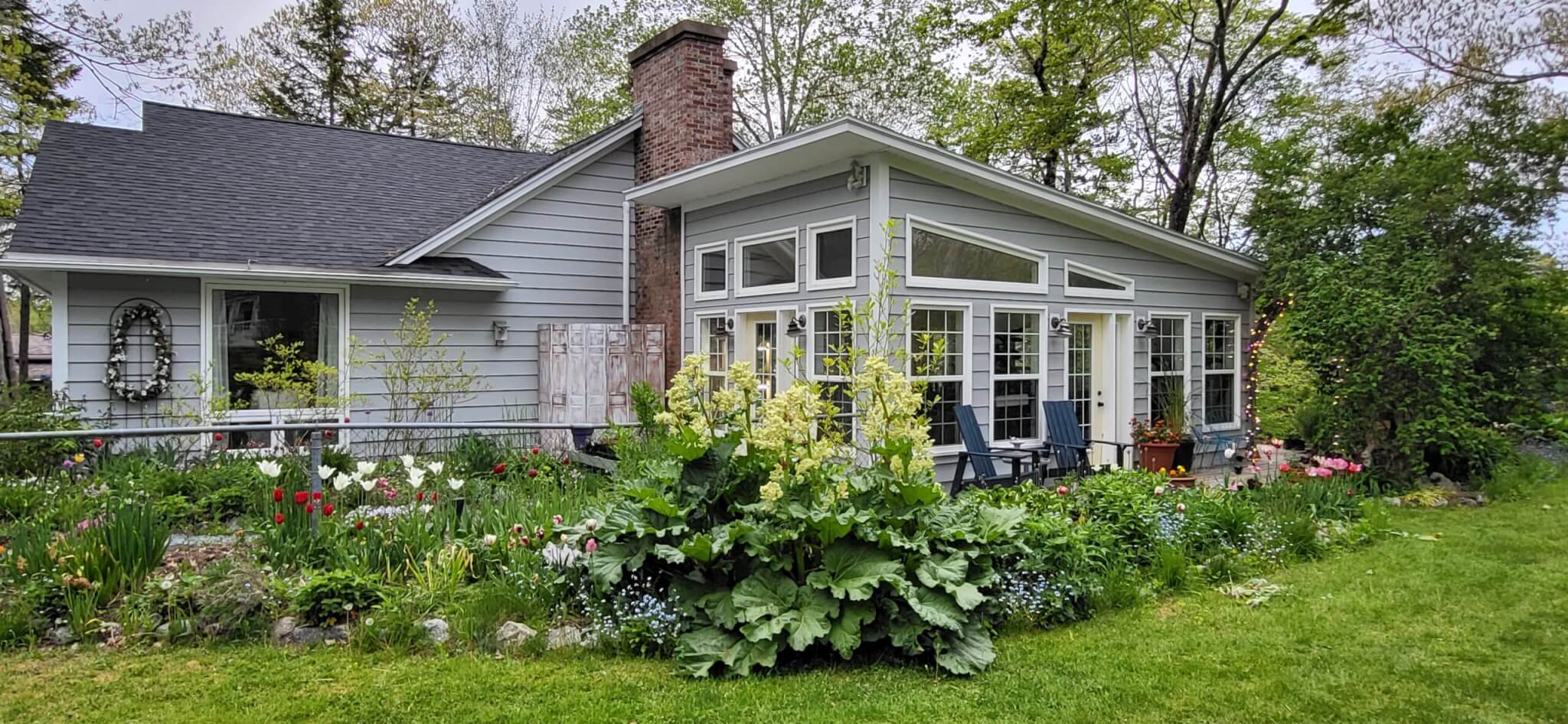
Clare and his brother Jim bought the 1940’s cottage 22 years ago. At that time, the house stood out rudely from the surrounding lot. Over the years they created a series of berms so the house now blends naturally with the surrounding property. The original windows were replaced with larger ones to take better advantage of the views of the garden, which is seen as an extension of the house. “We’re trying to blend inside and outside, to meld them,” emphasize both Collie and Clare. Jim, who owns a successful design business in Toronto, has played a crucial role in the house design and renovations.
The influence of light has been a key consideration in the garden’s design. The garden has been oriented with the sunrise and sunset. “Plants grow better on that axis,” explains Clare, “and when the sun sets, it under-lights everything. The evening setting is amazing due to the elevation and orientation.”
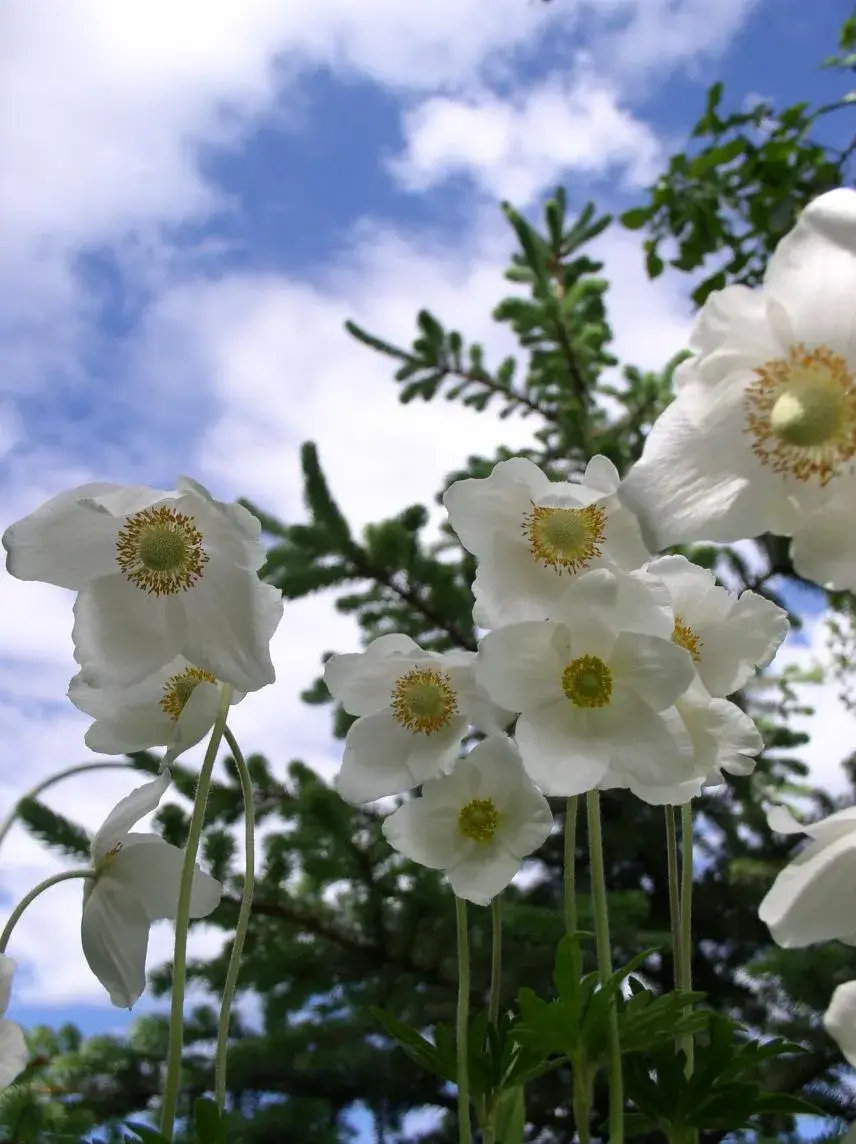
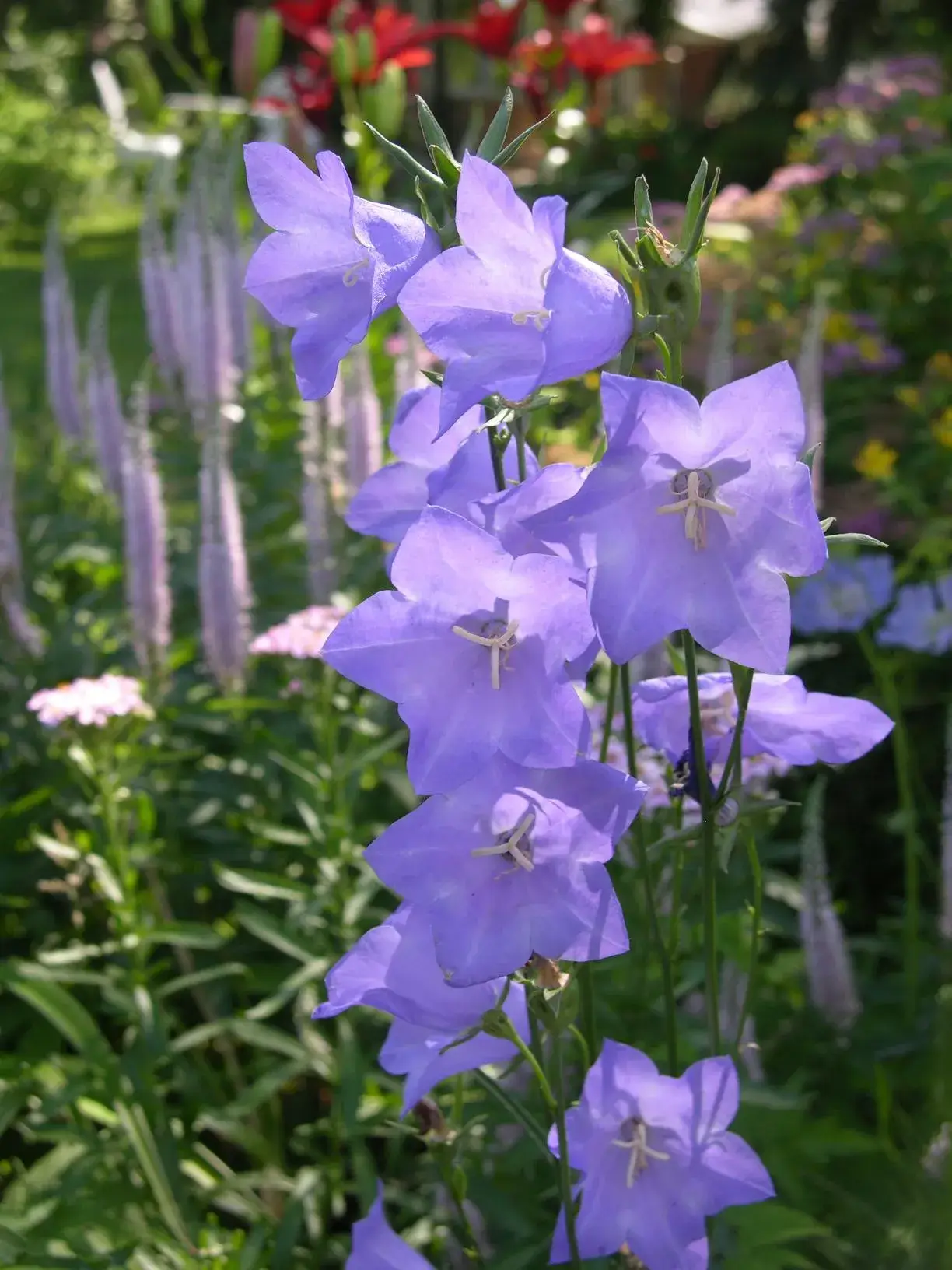
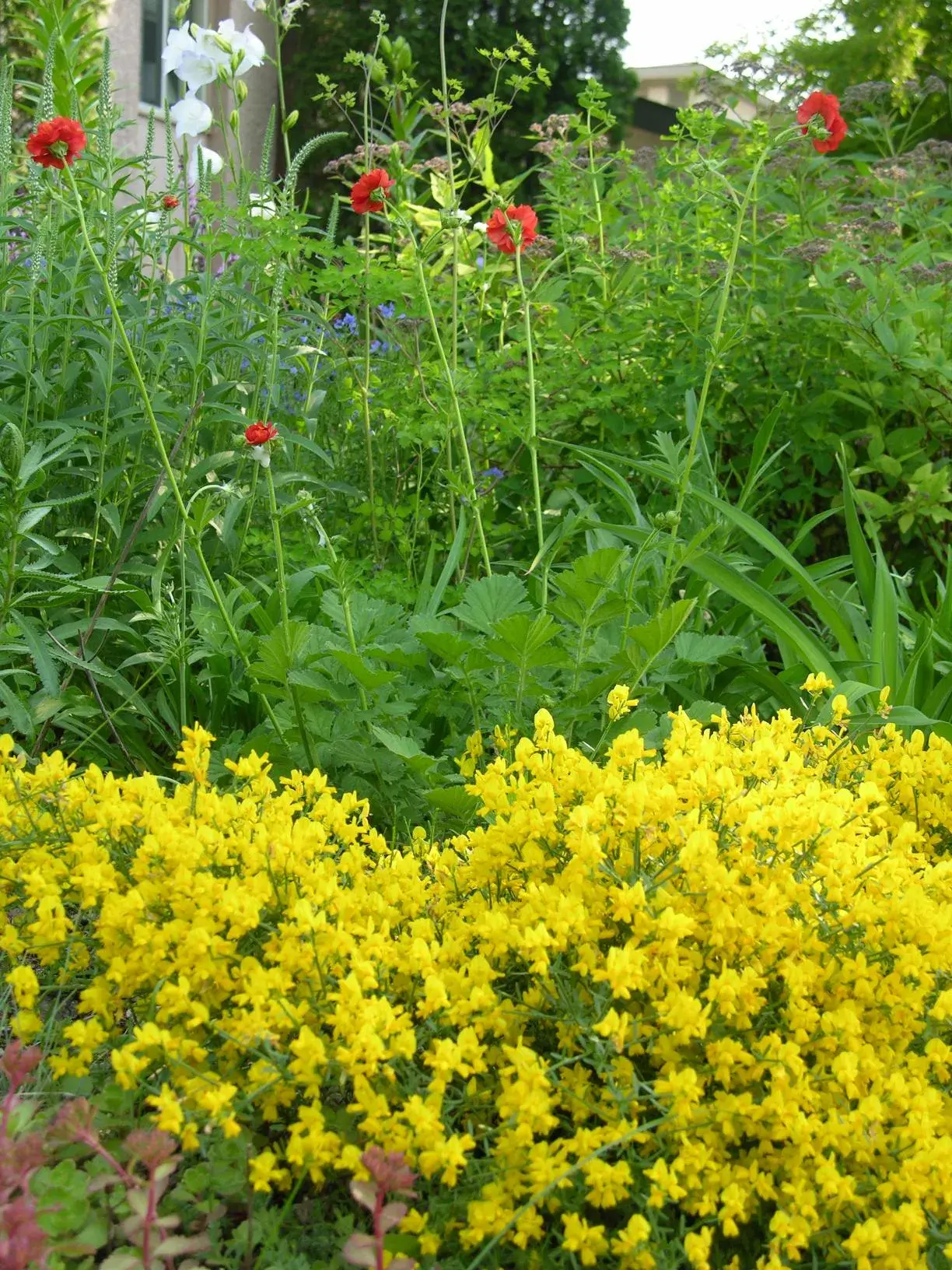
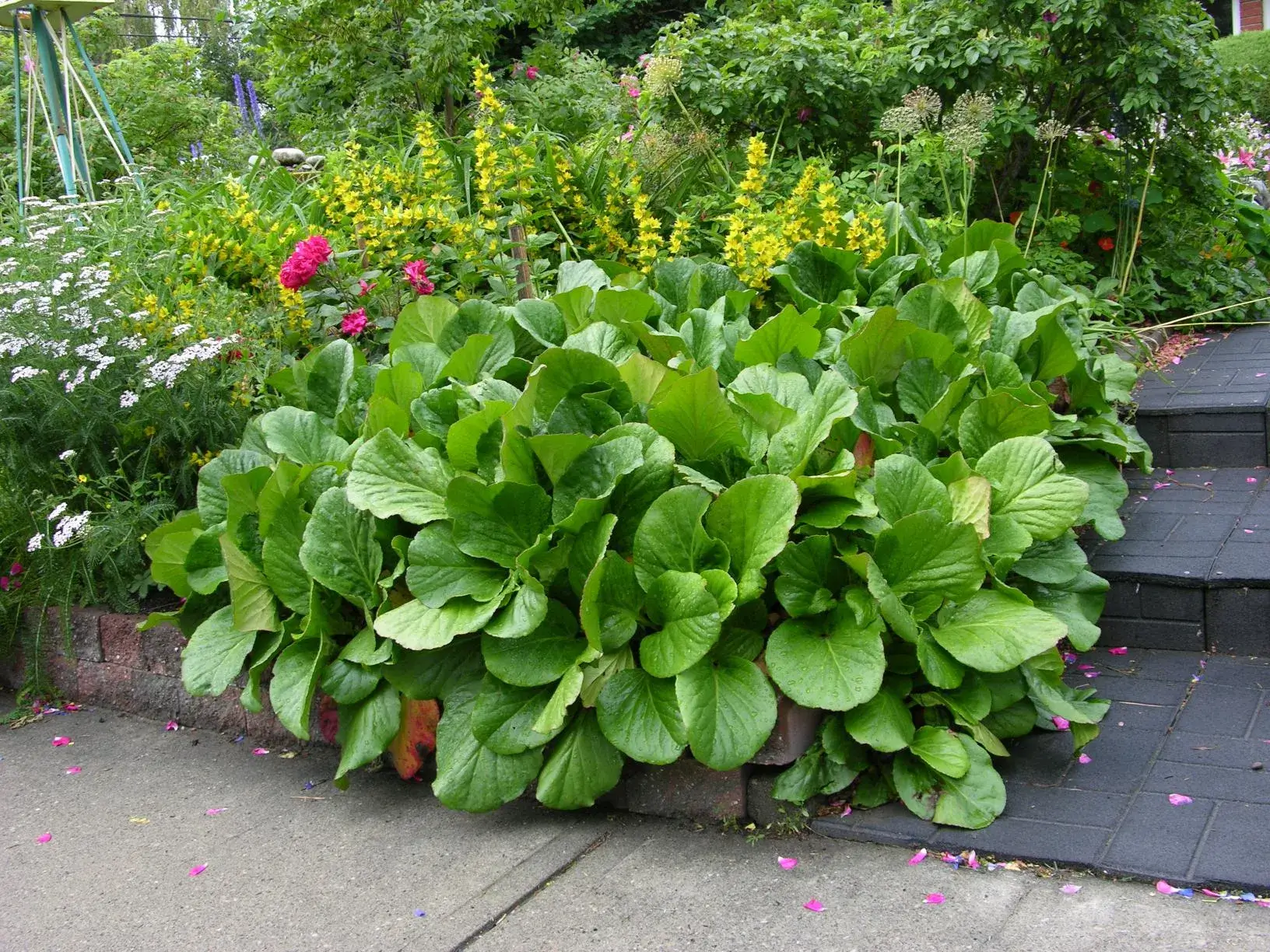
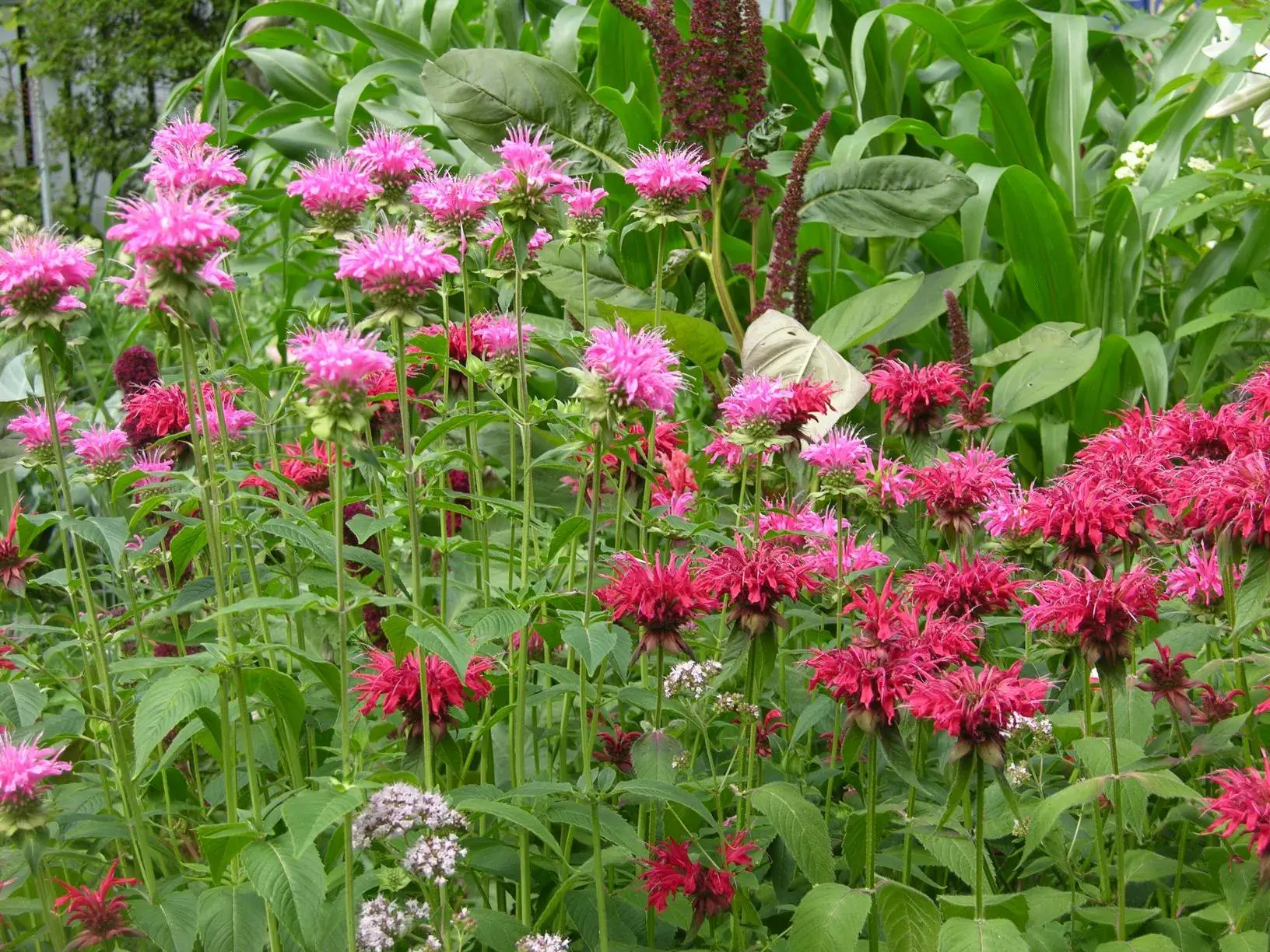
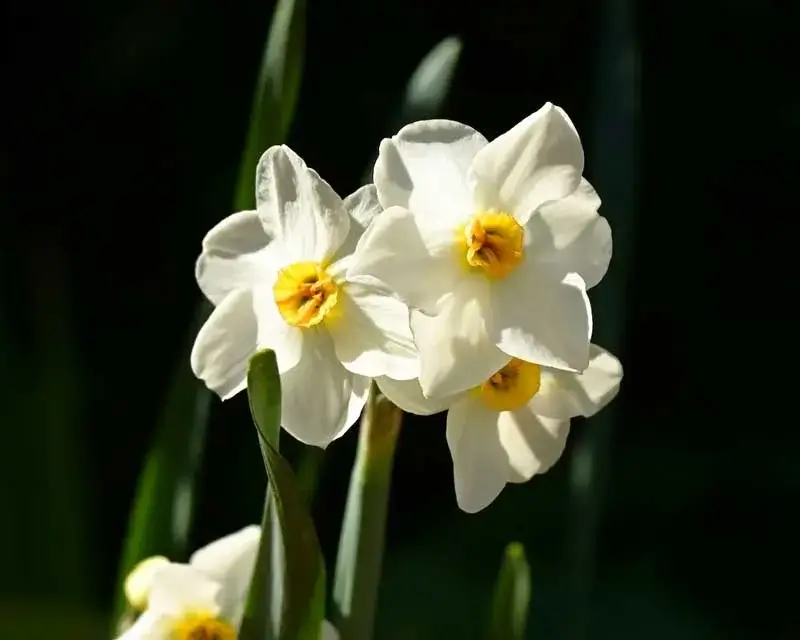
Perennials are the mainstay of the informal English garden, which changes week by week. The profusion of blooms starts in early spring with crocuses, miniature iris, tulips, daffodils, anemones, lungwort, lily-of-the-valley, hyacinths and primrose. Forget-me-nots, which form a carpet around the daffodils, make blue waves around the garden. In summer, there are drifts of Icelandic poppies, iris, California poppies, lupines, foxglove, hardy geranium, Asiatic lilies and day lilies. Phlox, purple coneflower and black-eyed Susan bloom from late summer into the fall.
The perennials are augmented with annuals for patches of continuous colour. Collie starts many plants from seed in the greenhouse. Disease-resistant old roses enhance the sensory experience with their sweet fragrance.
The garden is primarily shady but the trees have been trimmed to allow some sunlight into the garden. One of Clare’s favourite gardening vignettes is the view of the Eastern redbud tree, planted in memory of his wife, blooming in combination with the neighbouring apple tree. The view of the sedum dripping off the stone as seen from the next-door neighbour’s yard is one of Collie’s favourite scenes
Clare and Collie share in the garden work with input from Clare’s brother, Jim. “If we see something we like, we put it where we think it should be and then observe,” explains Clare. “I like to roll with it and experience it. We can engineer life to death. I like an element of surprise.”
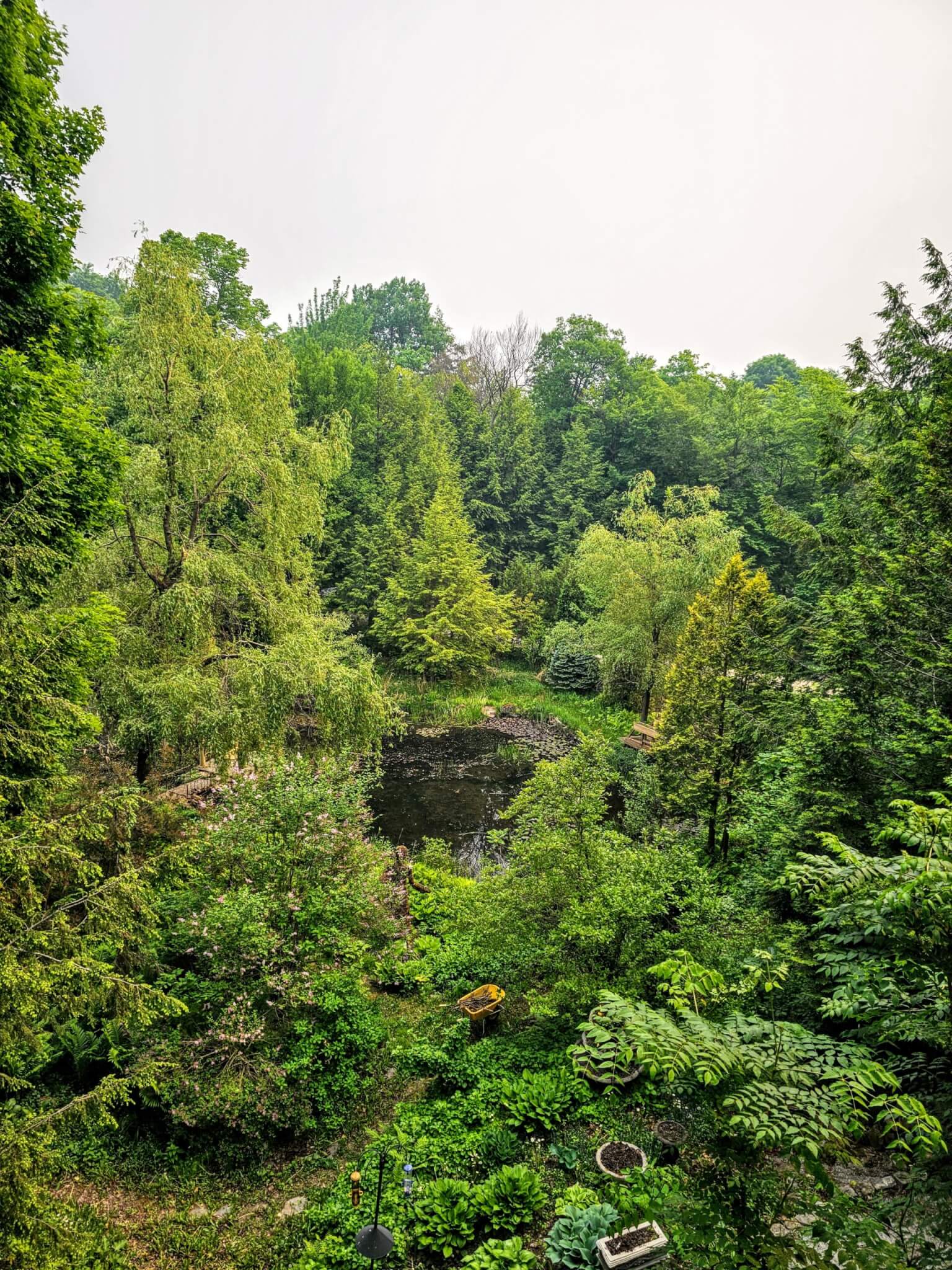
The garden is a Mecca for wildlife. Wild turkeys, rabbits, chipmunks, hummingbirds, butterflies and frogs are all regular visitors. Located on the shore of the lake, they are on a migration pathway for many birds. They have seen scarlet tanagers, indigo bunting and the rare orchard oriole. Goldfinches love the many cosmos found in the garden and swallowtail butterflies are attracted to the zinnias, says Collie. In winter, they’ve even had a mallard duck bathing in the heated water fountain. Collie, a passionate photographer, finds ample subjects for the camera in the garden.
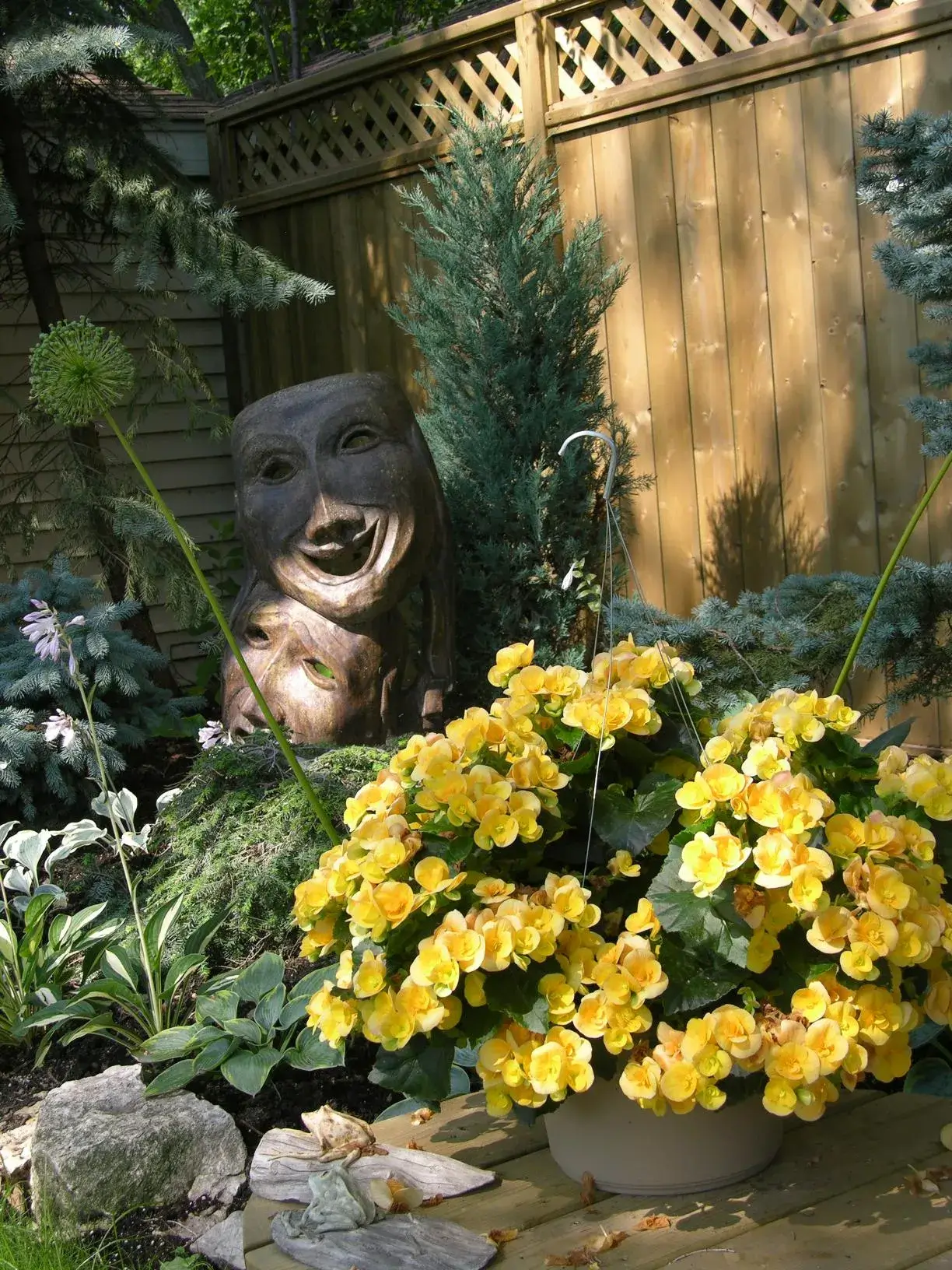
Many of Clare’s stone sculptures punctuate the garden. After retiring from a 33-year career in the computer industry, he developed a second career as a sculptor, a spin off from using stone in the garden. His sculptures have won awards and have been purchased by many private collectors. “Sculpting and gardening are alike,” says Clare. “They both have to look good from all sides.”
Their location on a cliff overlooking Lake Huron creates a unique microclimate which poses some gardening challenges. A prevailing wind off the lake really dries the garden out. Tables on the lake side of the house are anchored to prevent them from being carried away by the wind. Many of the trees have grown on a slant, adding charm and uniqueness. However, this really defines what is planted and where it’s planted. Wind carries seed from the lakeside slope so they try to plant things that will control weeds. While not currently a problem, shoreline erosion has been a problem in the past. Ribbon grass with its deep roots has helped to stabilize the soil.
The garden is constantly evolving and has expanded to include neighbouring properties and public lands. I don’t think it will ever be finished,” says Clare, “but we have reached the maximum as to what we can maintain. We’re better to limit ourselves and do it well.”

*Originally published on Ontario Gardener 2007 Early Spring issue